


On Frogs, Hot Springs & Dangerous Illusions
Everyone knows the story of the frog in boiling water.
Supposedly, if you toss a frog into a pot of boiling water (please don’t), it’ll leap right out. But place it in cool, oh-so-comfortable water and slowly turn up the heat, it’ll stay. The poor little fool will sit there, continue to stay, until it’s boiled alive.
This is such a widely repeated analogy, a wonderfully persuasive story. Scientifically, it is also absolute nonsense.
As it turns out, if you throw a frog into boiling water (again, don’t!), it’ll be horribly scalded before it has a chance to escape. It would have to be some kind of a superhero frog to leap out unscathed. Also, if you place a frog in cool water and gradually turn up the heat, the frog will hop out, as soon as the temperature becomes unbearable.
Frogs, it seems, have better survival instincts than we’ve given them credit for.
Frogs, it turns out, aren’t that dim.
And what are the chances that we aren’t either?
I think about this often. Not because I spend an unusual amount of time contemplating amphibians (although that wouldn’t be entirely out of character), but because the metaphor refuses to die. We consistently invoke this tidbit of myth whenever we talk about climate change, shrinking of freedoms, algorithmic rabbit holes, environmental collapse, or the thousand tiny shifts that make today’s world feel topsy turvy and more strange than yesterday’s.
I’ve certainly caught myself wondering often about our new normals, and how we’re all quietly simmering, mistaking the steadily rising temperature for normal life. The clickbait headlines become familiar. The impossible becomes everyday ordinary (meh.). We adapt, and adapt some more. Adaptation eventually has a funny way of disguising itself as acceptance.
This is precisely why I find the real story of the frog in boiling water more comforting than the myth.
The truth suggests that living organisms aren’t destined to passively cook while the world burns around them. We do notice. We do have thresholds. We do recognize discomfort long before catastrophe, even if acting on it sometimes takes a little longer than it should.
So perhaps the problem isn’t that we’re all frogs in slowly boiling water.
And the the moral isn’t don’t be the frog.
It’s this: Pay Attention.
When you notice the temperature rising, don’t convince yourself you’ve stumbled into a luxurious hot spring.
When the more sensitive froggies around you start hopping, pay attention.
They’re most probably not overreacting.
They’re likely just noticing the temperature before you do.
And if the water’s getting too hot…
HOP.
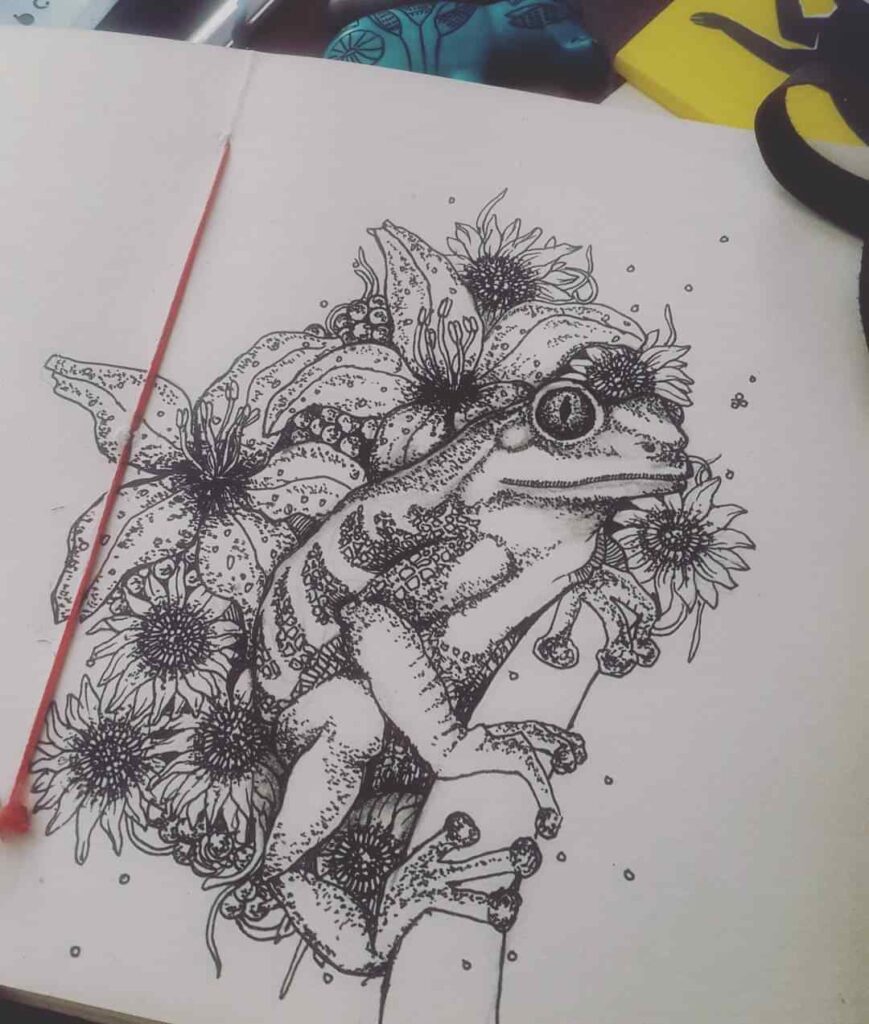
Kingdom: Animalia
Phylum: Chordata
Class: Amphibia
Order: Anura
Family: Hylidae
Genus: Agalychnis
Species: A. callidryas
Binomial name: Agalychnis callidryas
La Rana Hip hopper, 2016
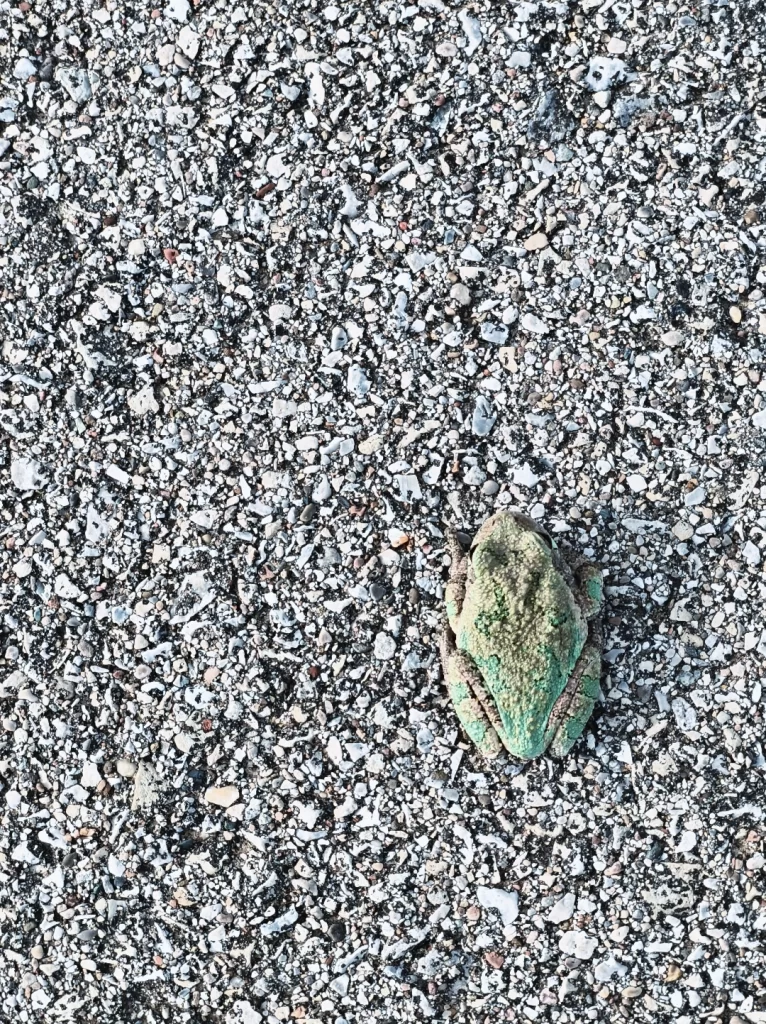
At Westfield, Indiana
More Field Notes
- Navigating the Field Guide
- A walk through Cool Creek Park
- When is an artwork complete?
- Cartographies Of Mischief
- The Usual Suspects
- Everybody’s Elsewhere